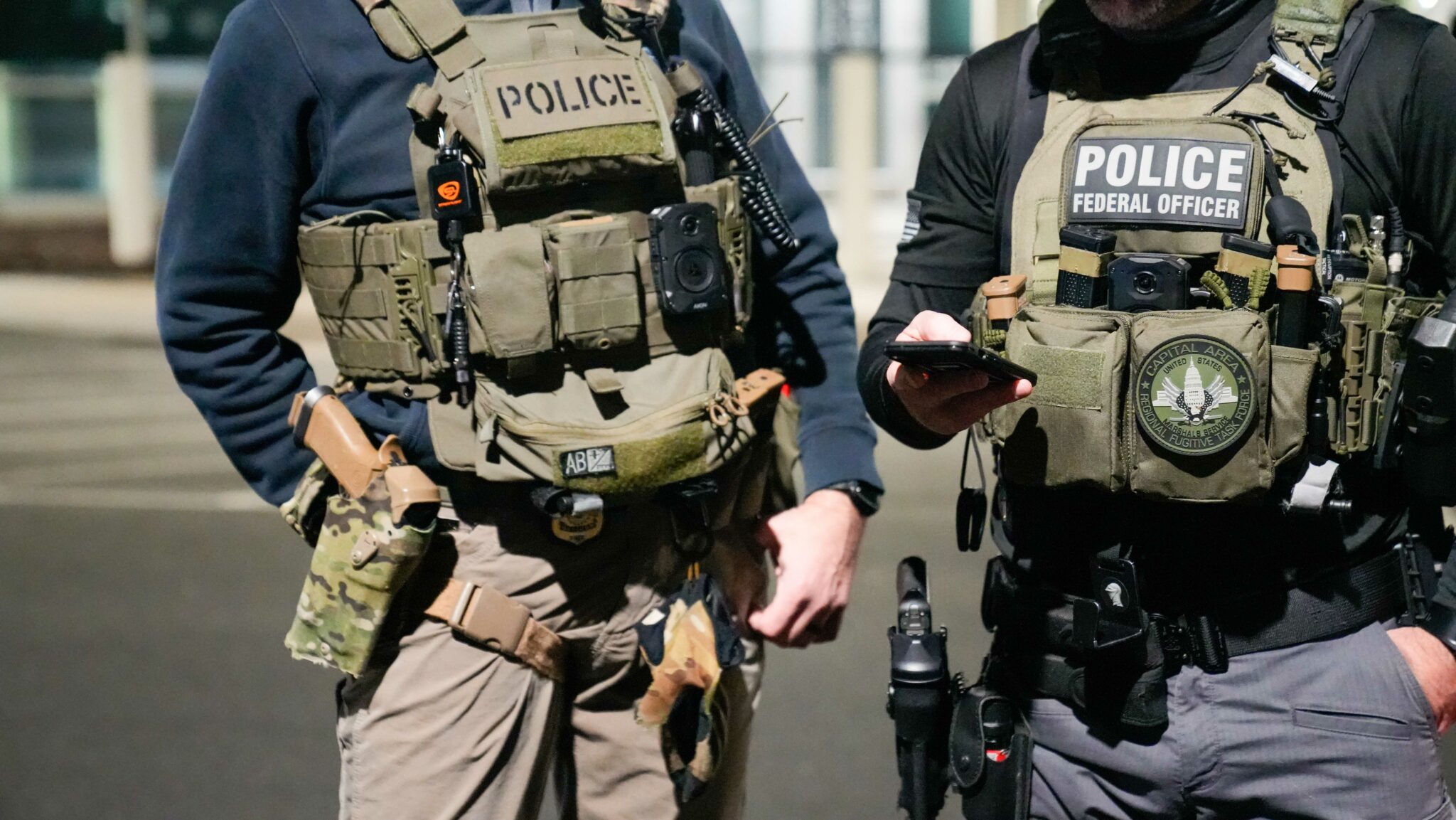
Legislation to force federal immigration agents to get court approval before entering schools and health care facilities cleared the Washington state Senate on Thursday.
Senate Bill 5906 covers “nonpublic areas” of preschools, K-12 schools, health facilities, adult family homes, higher education institutions and election offices.
It also prohibits early learning providers and school district employees from collecting information about the immigration statuses of students and their families.
It’s basically an extension of the Keep Washington Working Act, the 2019 law setting limits for how police and others can cooperate with federal immigration enforcement.
The state already has model policies for public schools to deal with immigration enforcement. The legislation seeks to enshrine them in law and expand them to more locations amid the Trump administration’s immigration crackdown.
The Keep Washington Working Act “did not cover day cares. It did not cover public or nonpublic hospitals. It didn’t cover nursing homes,” said the bill’s sponsor, Sen. Drew Hansen, D-Bainbridge Island.
The measure passed on a party-line 30-19 vote with Democrats in support.
U.S. Immigration and Customs Enforcement often uses administrative warrants, which only require approval from an ICE official. This bill calls for a judicial warrant or court order before agents can enter these facilities.
Upon taking office, President Donald Trump rescinded guidance shielding churches, schools and hospitals from immigration enforcement.
Last month, several Seattle schools sheltered in place for a day due to unconfirmed reports of ICE activity in the area. The rumors turned out to be false.
Hansen recalled being able to take his mother to the hospital recently without having to worry about immigration enforcement.
“What happens if I’m Drew with a different last name, and I’m born in Guatemala and grew up in Washington state,” Hansen said. “It might be the case that you have someone in your family in trouble and you don’t quite know if you are going to be safe going into that ER from ICE enforcement activity. And we can’t have that.”
Sen. Jeff Holy, R-Cheney, said he wishes this enforcement wasn’t happening, but it’s the job of Congress, not the state Legislature, to address.
“Using a vehicle like this as a thinly veiled attempt to directly obstruct a federal investigation, execution of federal laws by federal law enforcement officers under color of statutory authority gives me pain,” Holy said, calling the legislation a “ruse.”
Hansen’s bill defines “nonpublic” as an “area in which authorized individuals have a reasonable expectation of privacy.” These could be places that require a key to enter or that otherwise limit access to authorized people.
Under the legislation, colleges will need to designate areas as public or nonpublic. School boards would have to adopt or amend policies for limiting immigration enforcement in their schools. The attorney general’s office would be tasked with developing model policies for early learning providers.
As for auditors’ offices, Hansen’s proposal defines anywhere ballots are handled, processed, counted or tabulated as nonpublic. Republicans took issue with this. Sen. Drew MacEwen, R-Shelton, called it “disturbing” because votes are counted publicly.
Hansen countered that election observers viewing vote counting are fine, but “the places where we tabulate ballots are generally not widely open to the public.”
If union employees at these types of facilities are subject to immigration enforcement, the employer has to contact their bargaining representative.
Sen. Manka Dhingra, D-Redmond, recalled the immigration arrest of the Juanita High School theater manager last summer, noting “no one knew where he was.” When the news eventually got out, his union raised money for his legal fight.
Roughly a quarter of early childhood educators are immigrants, including those both with and without legal status, according to data from the Center for the Study of Child Care Employment at the University of California, Berkeley.
The legislation is known as the Secure and Accountable Federal Enforcement, or SAFE, Act.
It now goes to the House. If passed and signed by Gov. Bob Ferguson, it would take effect immediately.
Meanwhile, King County Executive Girmay Zahilay on Thursday signed an executive order looking to ban immigration enforcement agents from nonpublic county property.
This article has been reposted with permission from the Washington State Standard, part of States Newsroom, the nation’s largest state-focused nonprofit news organization and committed to shining “a light on policy and politics in all 50 states.” Click here to support nonprofit, freely distributed, independent local journalism. Read this article and others online at Washington State Standard.
TAKE ACTION: Do you have an opinion or stance on SB 5906? Make your voice heard by reaching out to your representatives in the state House and Senate.